
Visitas guiadas
Hacer barrio
Building community
Romina Canna, Sofia Ennok, Nina Grandguillaume, Paolo Millan Vivian
28 feb. 2026
Palacio de Mansilla – Creative Campus, Segovia


Horario
15:00
Horarios de la sede
De lunes a viernes de 10:00 a 21:00 horas. Sábados de 12:00 a 20:00 h.
Cerrado los días festivos.
Sede
Palacio de Mansilla – Creative Campus, Segovia
Pl. la Trinidad, 14, 40001 Segovia, España
Entrada
Ruta
Segovia, reconocida por su imponente acueducto romano y su rico patrimonio monumental, es, para sus habitantes, una ciudad de barrios: espacios donde la vida cotidiana se desarrolla en comunidad. Cada barrio posee una identidad propia, forjada a través de su trayectoria histórica, espacial y cultural. Sin embargo, a pesar de su relevancia como unidades socio-espaciales fundamentales dentro del tejido urbano, estos espacios son raramente documentados mediante marcos visuales y conceptuales que permitan explorar sus dimensiones relacionales, experienciales y materiales.
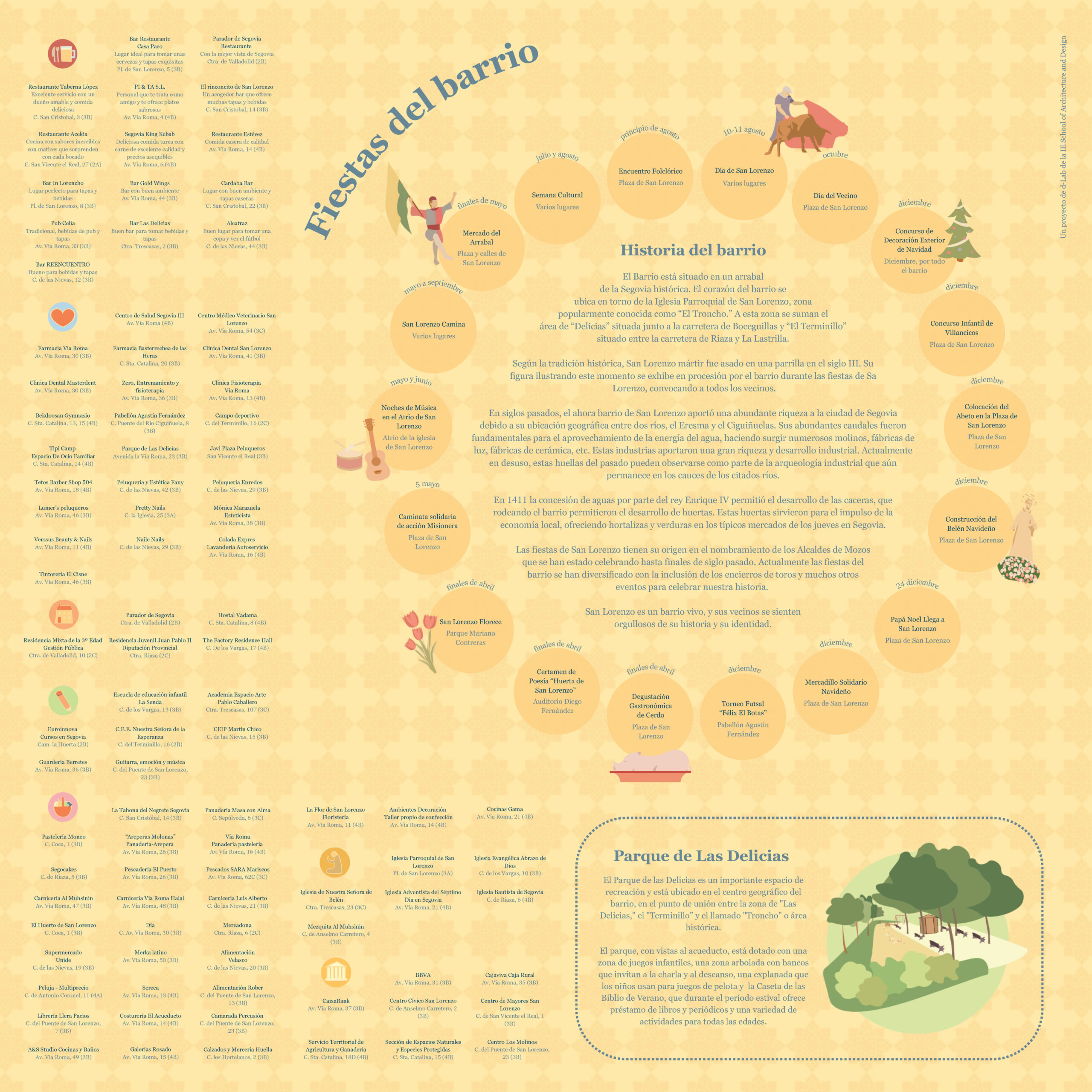
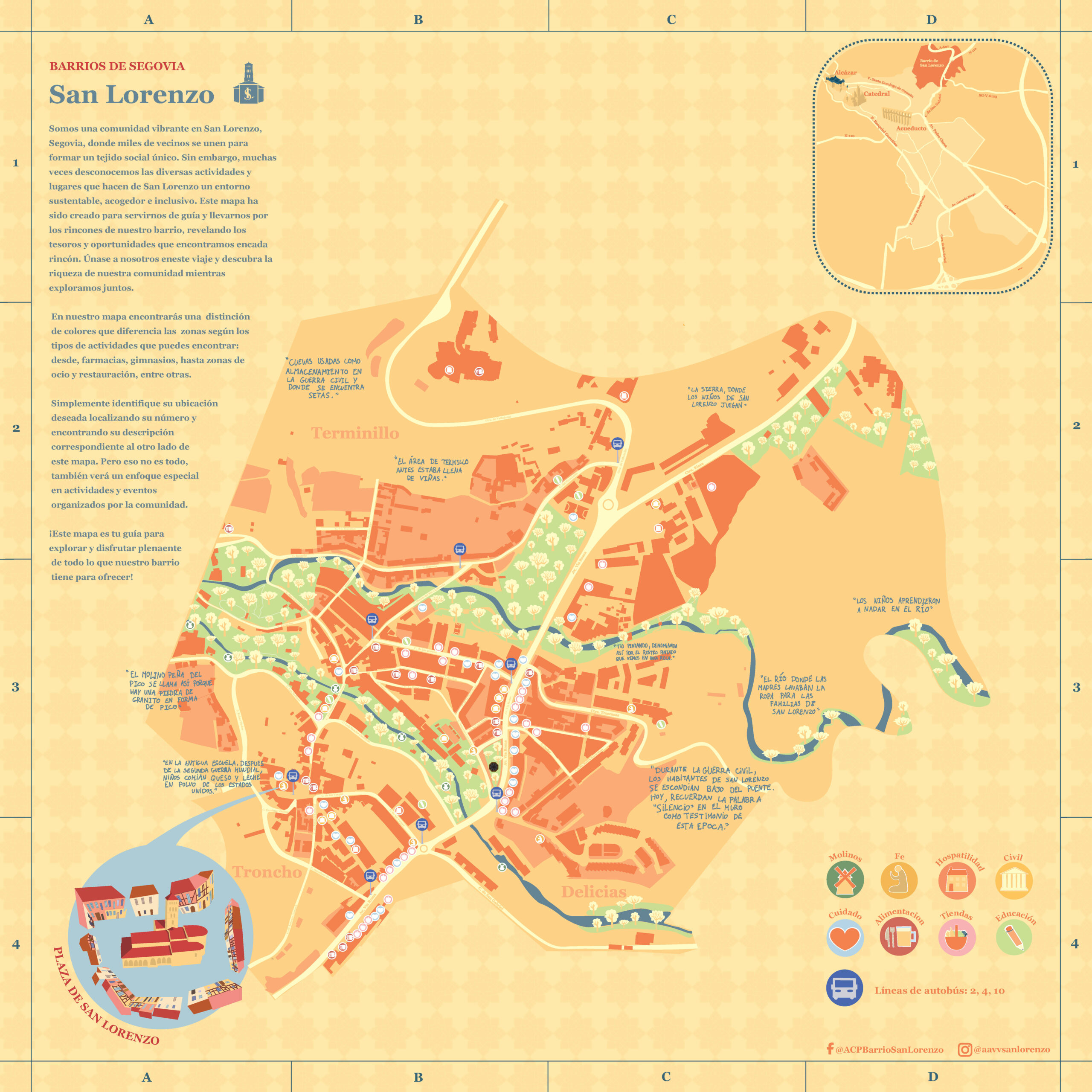
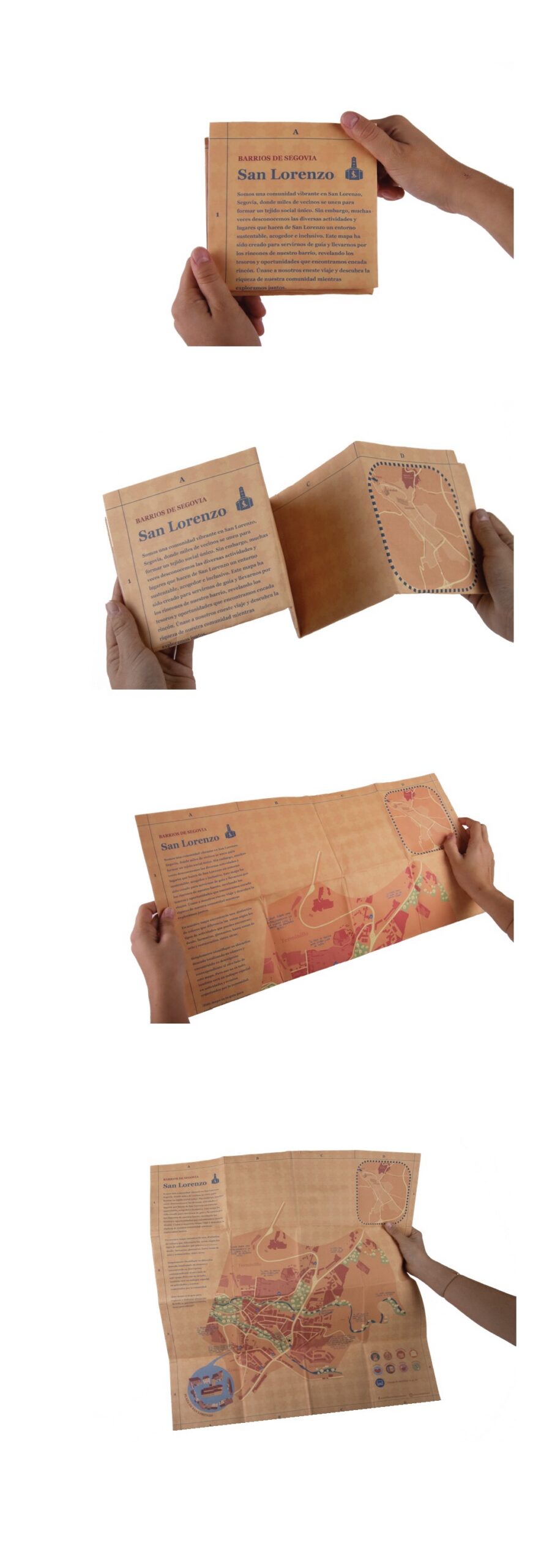
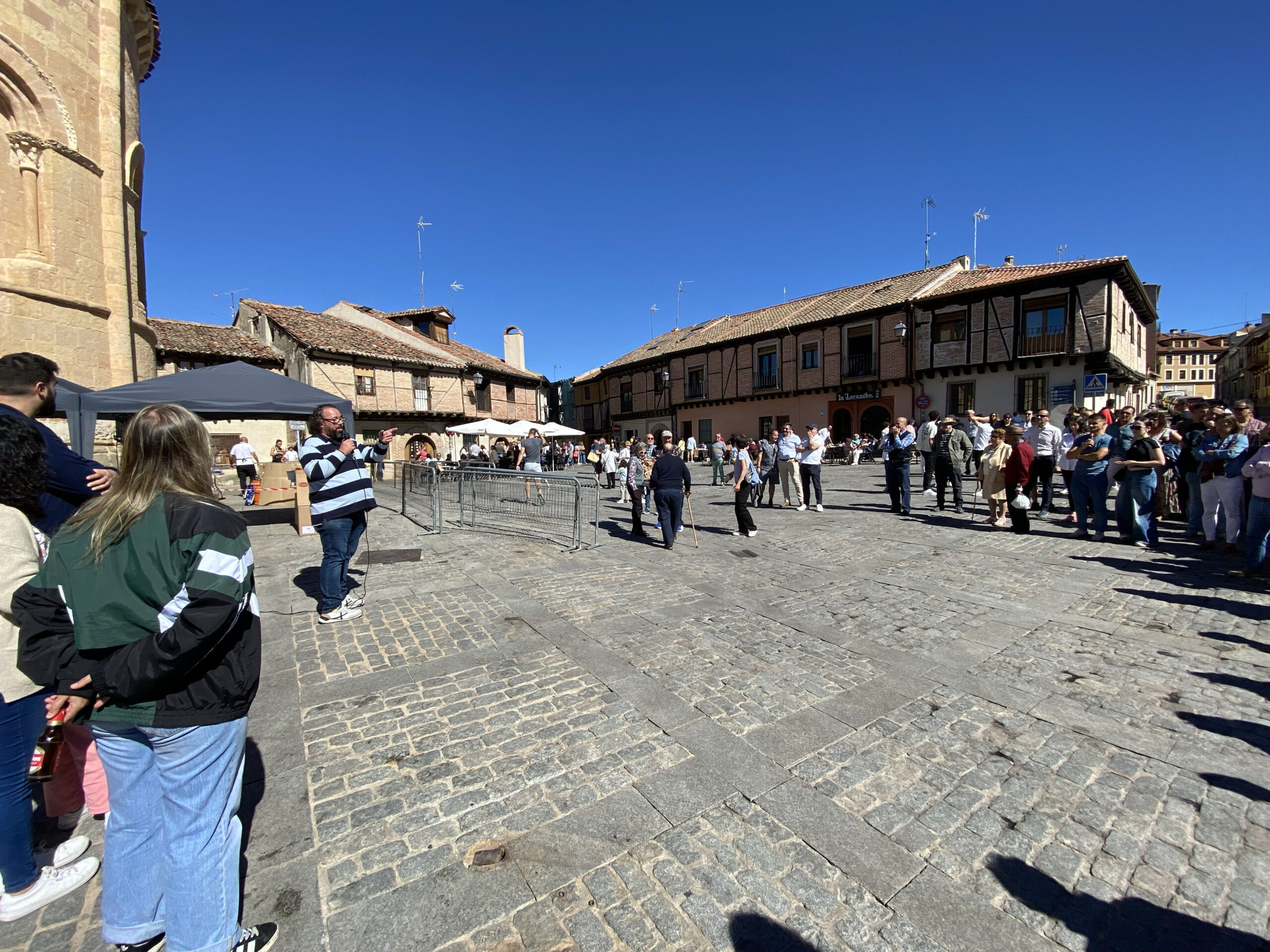
El proyecto «Hacer Barrio» comenzó en el d-Lab (laboratorio de diseño) de la IE School of Architecture and Design hace casi tres años como una iniciativa para capturar, resaltar y divulgar la esencia del barrio de San Lorenzo (Segovia) a través de un mapa. Este mapa, tradicionalmente concebido como herramienta de localización, se redefine como una cartografía de las condiciones de vida, historias y lugares que conforman el barrio como un espacio relacional y emocional.
En el marco del Madrid Design Festival, el d-Lab de la IE School of Architecture and Design, en conjunto con la Asociación La Parrilla de San Lorenzo, propone continuar esta investigación, ampliando la noción de barrio como construcción colectiva, a través de un programa en dos etapas:
Recorrido por el barrio
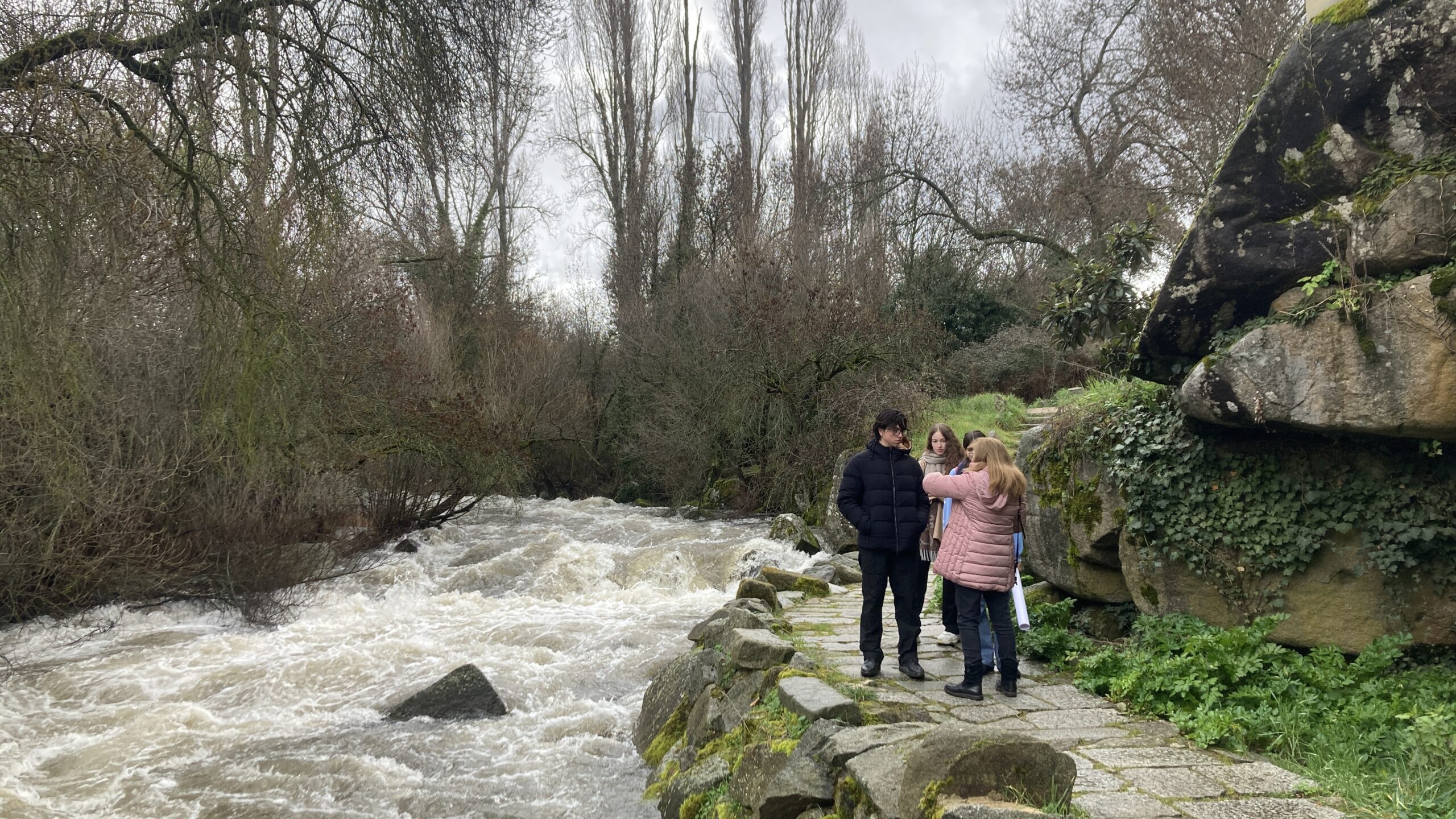
Visita guiada con miembros de la Asociación de Vecinos, promoviendo la construcción colectiva desde la experiencia directa de habitar el barrio. Durante la visita, los participantes registrarán gráficamente sus observaciones, experiencias y percepciones.
Taller de reflexión y construcción colectiva
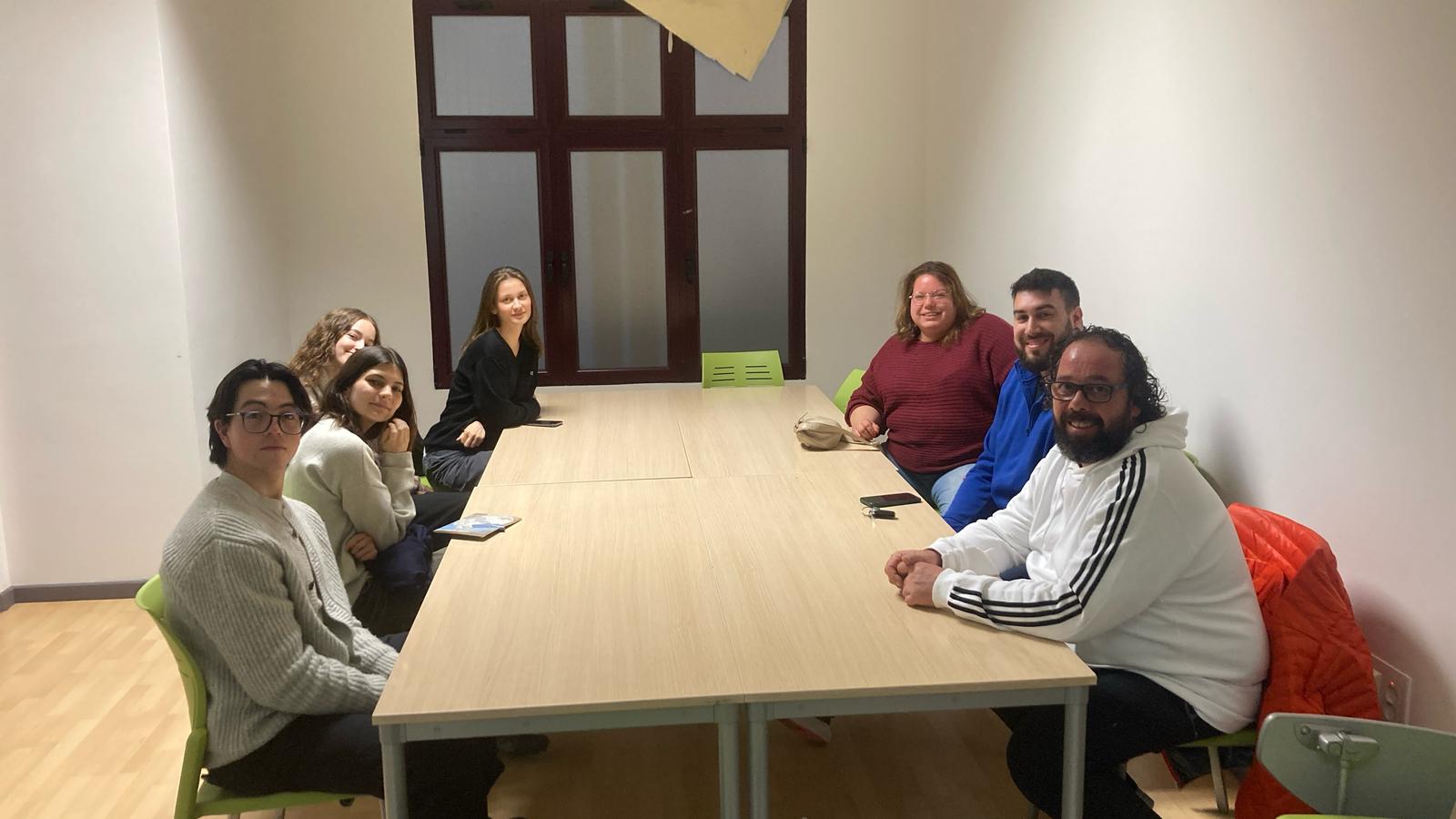
Tras la visita, se realizará un taller para reflexionar sobre las múltiples perspectivas, elementos, historias y espacios que conforman el barrio mediante la construcción de un mapa colectivo. La producción del taller se recogerá en forma de un archivo de narrativas subjetivas, resaltando las dimensiones emocionales y espaciales del barrio.
El proyecto busca resaltar la relevancia cultural de los barrios como estructuras fundamentales de la vida urbana y del sentido de pertenencia. Nuestro objetivo es fomentar la participación activa de vecinos, estudiantes y miembros de la comunidad, invitándolos a formar parte de este acto compartido de «hacer barrio».
Segovia, recognized for its impressive Roman aqueduct and rich monumental heritage, is, for its inhabitants, a city of neighborhoods: spaces where everyday life unfolds in community. Each neighborhood has its own distinct identity, shaped through its historical, spatial, and cultural trajectory. However, despite their relevance as fundamental socio-spatial units within the urban fabric, these spaces are rarely documented through visual and conceptual frameworks that allow for the exploration of their relational, experiential, and material dimensions.
The project “Making the Neighborhood” began almost three years ago at the d-Lab (design laboratory) of the IE School of Architecture and Design as an initiative to capture, highlight, and disseminate the essence of the San Lorenzo neighborhood in Segovia through a map. This map, traditionally conceived as a means of spatial reference and orientation, is redefined as a cartography of living conditions, stories, and places that shape the neighborhood as a relational and emotional space.
Within the framework of the Madrid Design Festival, the d-Lab of the IE School of Architecture and Design, together with the Asociación La Parrilla de San Lorenzo, proposes to continue this research, expanding the notion of the neighborhood as a collective construction through a two-stage program:
Neighborhood walk
A guided visit with members of the neighborhood association, promoting collective construction through the direct experience of inhabiting the neighborhood. During the visit, participants will graphically record their observations, experiences, and perceptions.
Workshop for reflection and collective construction
After the visit, a workshop will be held to reflect on the multiple perspectives, elements, stories, and spaces that make up the neighborhood through the creation of a collective map. The workshop’s output will be compiled in the form of an archive of subjective narratives, highlighting the emotional and spatial dimensions of the neighborhood.
The project seeks to highlight the cultural relevance of neighborhoods as fundamental structures of urban life and of a sense of belonging. Our goal is to encourage active participation from residents, students, and community members, inviting them to take part in this shared act of “making neighborhood.”
The project aims to highlight the cultural relevance of neighborhoods as fundamental structures of urban life and community belonging. Its goal is to encourage active participation from residents, students, and community members, inviting them to take part in this shared act of “making neighborhood”.
Participants
Romina Canna holds a Ph.D. in Urbanism from the Polytechnic University of Catalunya and a degree in Architecture from the National University of Rosario, Argentina. She has taught in Argentina, Spain, and the United States. Since 2011, she has served as an Assistant Professor at IE University’s School of Architecture and Design and, since 2013, as Director of d-Lab, a design laboratory that bridges academic research with public institutions and civic societies to carry out projects that actively engage communities.
Sofia Ennok is an Estonian Bachelor in Design student at IE University. She focuses on socially-driven design challenges while integrating a touch of sustainability. Inspired by human behavior, cultures, and nature, she values emotional connections in everything she designs, believing that design should influence people as much as people inspire design. Her perspective is global, aiming to contribute to the development of user-centered experiences that combine ergonomics and aesthetics.
Nina Grandguillaume is a French student enrolled in the Dual Degree Bachelor in Business Administration and Design at IE University. Thanks to this combined program, she focuses on both human interaction and the practical aspects of design. During her years in Segovia, she immersed herself in the city and its community, which led her to work on this project with d-Lab and continue her engagement with the local environment.
Paolo Millan Vivian, from Mexico, is a Bachelor in Design student at IE University. He began his design studies in Segovia and became deeply connected with the city’s unique neighborhoods. Paolo has participated in the d-Lab at the School of Architecture and Design, where he had the opportunity to design with and for the San Lorenzo neighborhood in Segovia.
Meeting point: Palacio de Mansilla – Creative Campus, Segovia