

Matter in Transit: Wool as a Postnatural Territory
Mónica Sánchez-Robles
Curated by Francisco Cuéllar
Matter in Transit begins with a simple yet urgent question:
What happens when a material that has sustained a territory for centuries loses its economic value?
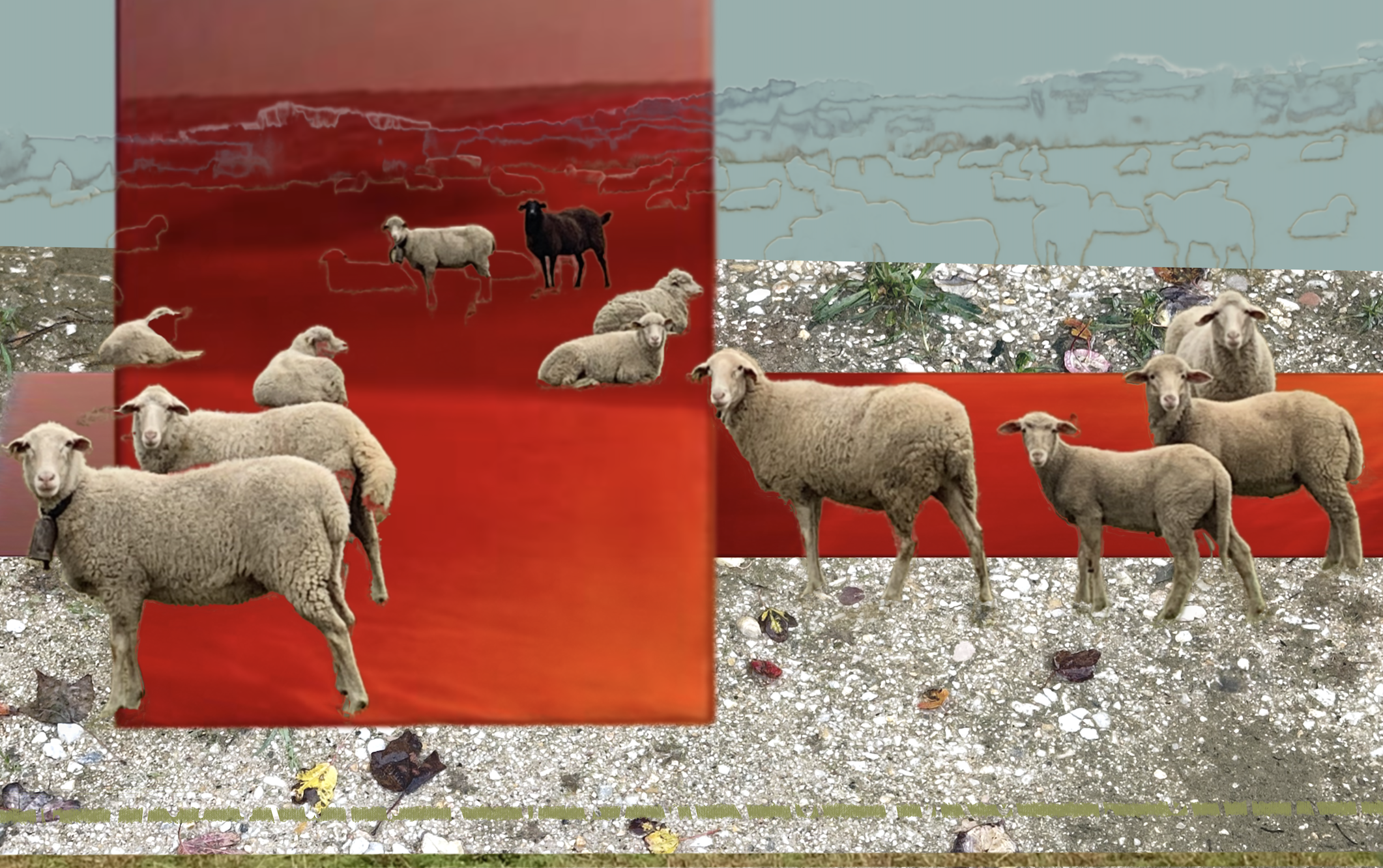
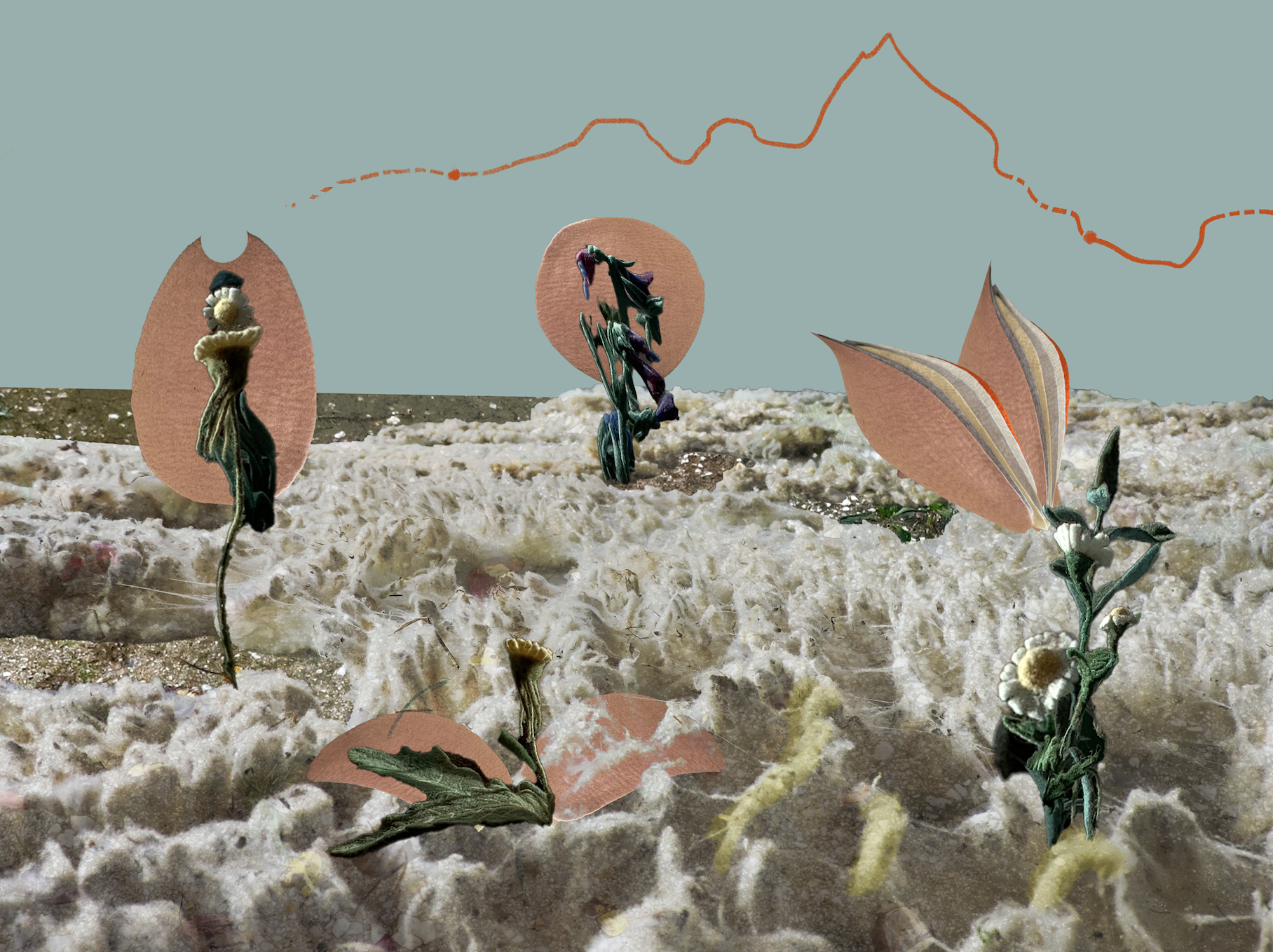
Here, wool is presented as both a physical document of transhumance—declared Intangible Cultural Heritage of Humanity in 2023—and as a postnatural material: a hybrid, living, and intervened organism whose current form is the result of centuries of domestication, pastoral economy, technology, territorial policies, and contemporary ecologies.
Transhumant wool was once a living infrastructure. Seasonal livestock routes acted as biological corridors that supported biodiversity, fertilized soils, and helped prevent fires. Today, much of that wool is discarded: in many cases, shearing costs more than selling the wool itself.
The installation approaches matter not as a stable object but as a continuous exchange of actions between bodies, territories, and systems. Wool embodies this history: a living fiber that has traveled across landscapes shaped by climate, communities, and political decisions. Here, it functions as an archive of movement, accumulating layers of history, economy, and territorial management.
At the center of the room, a large wool “world-ball” hangs suspended, slowly rotating. It does not organize the space—it creates tension. It signals the gap between cultural value and market value.
The technological dimension introduces a responsive logic: sounds, images, and light are activated by the presence of the audience. The work is incomplete without bodies to activate it, reminding us that territory was never a static backdrop but a living relationship.
The installation does not idealize the past. It invites reflection on what we do today with knowledge systems deemed obsolete by the economy but still essential for ecological balance and collective memory.
About Mónica Sánchez-Robles / Ras de Terra (Artist)
Mónica Sánchez-Robles is a multidisciplinary artist, independent curator, and co-founder of Ras de Terra, where she develops residencies and projects connecting art and territory. Her internationally recognized practice integrates art, architecture, and landscape, and she has exhibited in Paris, Miami, and Zurich. She also works in scenography for opera productions, approaching art as a tool for connection, awareness, and care.
About Francisco Cuéllar Santiago (Curator)
Francisco Cuéllar Santiago is a researcher, artist, curator, and photography professor in the Painting Department at the University of Salamanca. He holds a PhD in Fine Arts from the University of Granada, focusing on photography and video art. He is a member of the MASSIVA research group at the Universidad Miguel Hernández and has conducted scientific and artistic research in national and international projects, combining experimentation with scientific dissemination in the artistic and audiovisual sectors.